
What is a Variable Rate Application, and Is It Worth It for Your Operation?
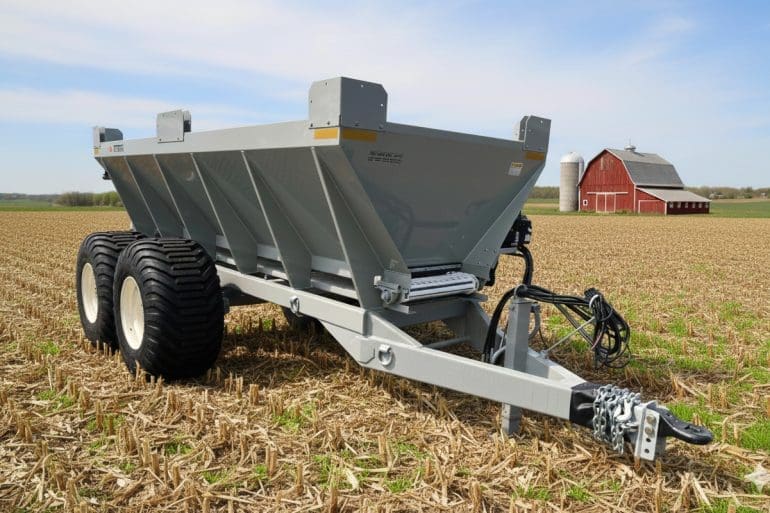
As fertilizer and lime costs rise, many growers begin questioning whether flat-rate applications still make sense across variable fields. Equipment decisions often lead back to options like a Stoltzfus Spreader, especially when inconsistent crop response highlights how differently soil conditions can perform within the same field.
Variable Rate Application (VRA) offers a way to respond to that variability by adjusting application rates as conditions change. For mid-sized corn and soybean operations, the real consideration is not just whether VRA works, but whether the technology fits existing practices, equipment, and long-term goals without adding unnecessary complexity.
What Is Variable Rate Application?
Variable Rate Application refers to the practice of adjusting fertilizer, lime, or litter rates on the go, based on a prescription map tied to GPS location. Instead of applying a uniform rate across a field, a VRA-equipped spreader changes the rate dynamically to match the needs of specific field zones. This is in contrast to a flat-rate application, which treats every acre the same regardless of soil nutrient, pH, or organic matter variability.
Common VRA applications include:
- Spreading lime based on soil pH maps
- Fertilizer tailored to nutrient maps
- Chicken litter applied in variable amounts depending on organic matter levels
What You Need to Implement VRA
To implement VRA with your Stoltzfus Spreader, you need a few key components working together.
1. A Variable Rate Ready Spreader
Stoltzfus offers Variable Rate Ready options on several models:
- Row Crop Spreader – A high clearance spreader designed for in-season use in tall crops
- Wet Lime Spreader – Built to handle heavy, damp materials with precision
- BMS (Bulk Material Spreader) – A versatile agricultural litter spreader for lime, poultry litter, compost, and other organics
These spreaders are equipped with hydraulic systems that enable precise control of the application rate. They’re compatible with most variable rate control systems sold by third-party dealers.
Note: The Redhawk ground-driven fertilizer spreader doesn’t require electronic VRA controls because its application rate is mechanically linked to ground speed. It’s a simple and reliable choice for growers not yet ready to invest in VRA technology.
2. GPS and Controllers
You’ll need a GPS-enabled tractor or retrofit system, plus a compatible rate controller. Stoltzfus does not sell controllers directly. Instead, most farmers work with their local precision ag dealer, who supplies the controller, software, and ongoing support. This keeps tech support close to home and ensures compatibility with other systems already in use.
3. Soil Maps and Prescription Files
VRA depends on accurate field data. Typically, you’ll start with grid or zone soil sampling. An agronomist or software system uses this data to build a prescription map. This file tells the controller when and where to adjust application rates.
How It Works in Practice
When Variable Rate Application is used with a Stoltzfus Spreader, the process relies on field data, prescription mapping, and real-time rate control working together in the field. Each pass across the field builds on that data to adjust application rates as conditions change, creating a more responsive and efficient application process. The full process looks like this:
- Collect field data through soil sampling, yield maps, or aerial imagery.
- Create a prescription map using agronomic software or a trusted advisor.
- Upload the file to the spreader controller.
- Adjust rates on the go via hydraulic control as the tractor moves across the field.
The result is a tailored application that delivers just what each area of the field needs.
VRA systems are often paired with other precision tools, such as auto-steer and RTK guidance, to maximize accuracy and reduce overlap.
When Variable Rate Application Pays Off
VRA is not for every farm, but it can deliver significant benefits when used in the right context.
Situations where VRA makes sense:
- Fields with high variability in soil types, slopes, or fertility
- Long-term fertility strategies aimed at improving soil balance
- Farms already using GPS, yield maps, or other precision ag tools
- Growers seeking to optimize input use, not just cut costs
In these cases, VRA can lead to:
- More consistent yields
- Reduced fertilizer and lime waste
- Better long-term soil health
Situations where it may not be worth the investment:
- Uniform, flat fields with minimal variability
- Smaller acreages where the cost per acre is harder to justify
- Farms without GPS or variable rate infrastructure
If you’re working with a small lime spreader on a limited acreage, for example, VRA may add complexity without a clear return.
Cost and ROI
Adopting a variable rate application with a Stoltzfus Spreader involves both upfront investment and ongoing costs. Understanding where those expenses come from and how they can translate into long-term value helps determine whether VRA is a practical fit for your operation.
Upfront Costs:
- VRA-ready spreader (or upgrades to existing equipment)
- Controller and monitor from your local dealer
- Agronomic services for soil sampling and prescription mapping
Ongoing Costs:
- Annual software or licensing fees (depending on provider)
- Maintenance and occasional recalibration of sensors
- Regular updates to soil maps to keep prescriptions accurate
While VRA can save money on inputs over time, its biggest value often comes from avoiding over-application and improving crop uniformity. In many cases, even a modest yield bump can justify the investment over a few seasons.
Stoltzfus Spreaders and VRA Compatibility
Stoltzfus makes it easy to incorporate VRA into your operation with spreaders that are built for precision.
Models with the Variable Rate Ready Option:
- Row Crop Spreader (high clearance spreader, great for post-emerge passes in tall crops)
- Wet Lime Spreader (the original lime spreader built for spreading lime that has been stored outside)
- BMS Spreader (large volume spreader for chicken litter, compost, lime, and more)
Each of these can be configured at the factory to accept VRA controllers from your preferred dealer. This ensures that farmers receive support from a provider they already trust, and that dealers work with components they know well.
Meanwhile, the Redhawk ground-driven fertilizer spreader continues to be a reliable, no-electronics option for growers who prefer simplicity.
Is It Right for Your Operation?
Variable rate application is most effective when it aligns with your operation’s scale, field variability, and existing precision tools. Farms managing diverse soil conditions across larger acreages often see the greatest benefit, especially when GPS guidance or field mapping is already in use.
In those situations, pairing VRA capability with a Stoltzfus Spreader designed for fertilizer, lime, or row crop applications can be a practical next step that supports both current needs and future growth. Whether you’re looking for a Stoltzfus lime spreader for sale or you want help with variable rate application, we are here to help.